


Collagen & Hair Loss After 30 for Men
Key Takeaways
- The Collagen-Hair Connection Most Men Never Make
- DHT, Male Pattern Baldness, and the Collagen Double Hit
- The Foundation: A Comprehensive Oral Hair Loss Protocol in One Capsule
- The Nutritional Layer: Amino Acids, Keratin, and What Hair Is Actually Made Of
- The Finasteride-Free Path: Oral Minoxidil for Men Who Want an Alternative
- Scalp-Level Support: Topical Compounds That Complete the Protocol
- How Men Are Getting Prescription Hair Support Without the Waiting Room
- What Your Hair Regrowth Protocol Actually Looks Like
Most men don’t think about collagen until they notice changes in their face. But there’s another consequence of collagen decline that hits earlier, harder, and in a place men often care about more deeply: the scalp.
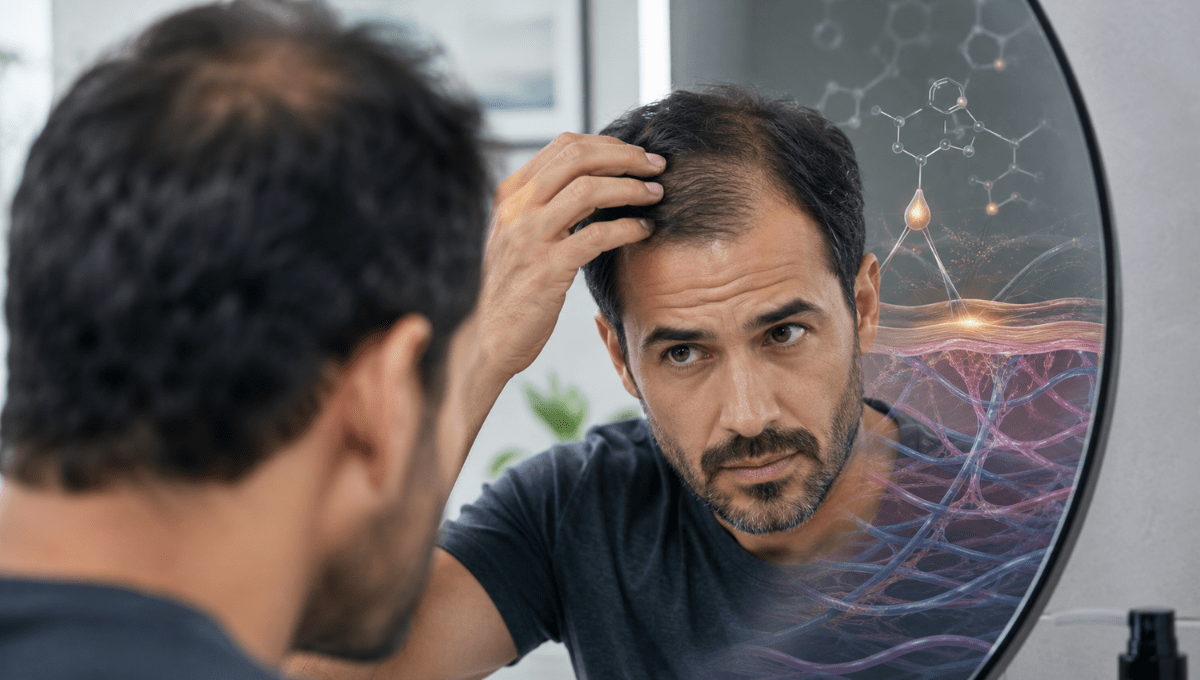
Your scalp is skin. And like all skin, it depends on a dense matrix of collagen fibers to do its job , anchoring hair follicles, supplying the vascular structures that feed them, and maintaining the physical architecture that keeps individual hairs in the active growth phase. When that matrix begins to break down, as it does in every man after 30, the structural foundation supporting your hair does too.
This reframes the hair loss question in a useful way. Oral hair loss treatment for men isn’t only about blocking DHT or extending the growth cycle. It’s about addressing the full internal environment that hair follicles depend on, hormonal signals, nutritional substrates, and scalp-level conditions that together determine whether a follicle thrives or miniaturizes over time.
Prime Pulse Rx was built for men who approach this precisely. Our compounded hair loss medication program combines clinician-reviewed oral and topical protocols into a multi-compound hair loss approach that addresses hair wellness from multiple mechanisms, not just one.
And it starts, as all good optimization does, with understanding the biology first.
The Collagen-Hair Connection Most Men Never Make
Collagen doesn’t just live in your face. It’s the primary structural protein of your skin, which means it forms the physical framework of the scalp, the organ your hair follicles are embedded in.
Type I and type IV collagen form the perifollicular sheath and basement membrane surrounding each hair follicle. This extracellular matrix anchors follicles in the dermis, provides structural support to the dermal papilla, the cellular hub controlling the hair growth cycle, and delivers the mechanical stability follicles need to maintain their geometry through years of cycling. When collagen density declines, this architecture softens. Follicles lose their anchor. The dermal papilla, already under hormonal pressure in men prone to male pattern baldness, has less physical support.
The connection deepens at the level of keratin synthesis. Hair is approximately 95% keratin, a fibrous protein assembled from amino acids including glycine, proline, cysteine, and methionine, many of which are also the breakdown products of collagen. This means scalp collagen effectively serves a dual function: structural integrity and amino acid supply chain. A depleted collagen matrix can reduce the substrate available for keratin production, affecting not just follicle anchoring but the quality and thickness of each hair fiber.
This is also where Vitamin C enters the picture. Vitamin C is a required cofactor in collagen synthesis — the body cannot build collagen without it. A premium oral hair regrowth capsule that includes Vitamin C isn’t just adding an antioxidant; it’s supporting the internal collagen-building process that scalp skin depends on. This is what “supporting skin from within” actually looks like biochemically.
Collagen production declines roughly 1% per year after 30. By a man’s mid-forties, the cumulative scalp collagen deficit — combined with DHT-driven follicle stress — creates compounding pressure that single-mechanism treatments often can’t fully address.
DHT, Male Pattern Baldness, and the Collagen Double Hit
Dihydrotestosterone (DHT) is the primary hormonal driver of androgenetic alopecia. Converted from testosterone by the enzyme 5α-reductase, DHT binds to androgen receptors in genetically susceptible hair follicles, triggering progressive miniaturization — shorter growth cycles, finer strands, eventual follicle dormancy.
The conventional framework for hair loss focuses almost entirely on this pathway: block DHT conversion, support the growth cycle, address the primary driver. That logic is sound. But it’s incomplete.
Oral minoxidil for male pattern baldness, like all hair regrowth interventions, operates in a scalp environment simultaneously dealing with age-related collagen depletion, chronic low-grade scalp inflammation, variable nutritional availability at the follicle level, and DHT-mediated dermal papilla stress. Addressing DHT while ignoring this broader substrate is like optimizing your training while neglecting recovery and sleep. You’re managing the obvious mechanism without managing the underlying conditions it operates in.
This is the clinical rationale behind multi-compound hair regrowth protocols. Each element in a well-designed protocol targets a distinct failure point: DHT inhibition, growth-cycle extension, nutritional substrate support, scalp inflammation management. Combined, they create layered support that individual compounds simply cannot replicate.
The collagen angle matters because it directly influences how well every other element of the protocol can work. A scalp with depleted extracellular matrix, compromised blood flow infrastructure, and reduced amino acid availability is a harder environment for follicles to function in regardless of how well-managed the DHT environment becomes.
The Foundation: A Comprehensive Oral Hair Loss Protocol in One Capsule
The core of most men’s hair regrowth programs is an oral protocol — and the most comprehensive approach consolidates the key components into a single, clinician-reviewed compounded capsule.
Our biotin, finasteride, and minoxidil oral combo is prepared by licensed U.S. compounding pharmacies , meaning the formulation is clinician-customized rather than mass-produced. Standard pharmaceutical products come in fixed doses; a minoxidil, finasteride, and biotin capsule from a compounding pharmacy allows a licensed provider to specify the combination and dose profile appropriate for your individual health intake.
The comprehensive hair regrowth capsule for men that anchors our program addresses multiple distinct biological targets:
Minoxidil: a vasodilator studied for its potential to support blood flow to hair follicles, extend the anagen (growth) phase, and reactivate follicles that have shifted toward dormancy. Research suggests oral minoxidil may support hair density in men experiencing androgenetic alopecia.
Finasteride: a 5α-reductase inhibitor studied for its potential to reduce scalp DHT levels, slowing or potentially reversing follicle miniaturization in susceptible men. Among the most extensively studied compounds in men’s hair loss science.
Biotin: a B-vitamin cofactor in keratin synthesis, studied for its potential contributions to hair fiber structure and overall hair quality.
Vitamin C and Calcium: cofactors that support collagen synthesis and cellular function, tying the nutritional layer of the capsule directly to the scalp collagen framework the article opened with.
L-Cysteine and Methionine: sulfur-containing amino acids studied for their potential role in hair shaft strength and follicle cell support (covered in depth in the next section).
Together, as a compounded hair loss medication with biotin and supporting cofactors, this capsule addresses the hormonal, growth-cycle, and nutritional dimensions of hair wellness in a single daily protocol — the all-in-one hair loss pill available through licensed prescription, without the need to source or stack separate products.
Individual results vary and depend on provider review, personal health factors, and consistency of use.
The Nutritional Layer: Amino Acids, Keratin, and What Hair Is Actually Made Of
Addressing DHT and the growth cycle handles the two most studied failure points in male hair loss. But hair follicles are biological factories — and factories need raw materials.
Hair shaft production depends on a continuous supply of specific amino acids, particularly those responsible for the disulfide bonds that give keratin its structure and mechanical strength. Two amino acids are central to this process.
L-cysteine and methionine hair growth research has explored follicle cell proliferation, hair fiber quality, and tensile strength of the hair shaft. Methionine is an essential amino acid that serves as the primary sulfur donor in protein synthesis. L-cysteine provides the sulfur-based disulfide bonds that give keratin its three-dimensional stability — resistance to breakage, structural integrity, mechanical strength. Without adequate availability of both, follicle capacity to produce high-quality fiber is constrained regardless of how well the hormonal environment has been managed.
Our biotin and keratin hair support prescription option includes these amino acid precursors alongside Vitamin C, calcium, and biotin, making it available as a standalone or complementary nutritional support layer for men who want to address hair fiber quality alongside hormonal and growth-cycle interventions.
As an amino acid hair loss treatment for men, this nutritional component isn’t a replacement for DHT management or vasodilatory support, it addresses the raw material availability that follicles depend on once they’ve been kept in the growth phase by the rest of the protocol.
Critically, our comprehensive hair loss treatment with vitamins and finasteride, and the nutritional cofactors it contains, addresses multiple layers of follicle biology simultaneously. That depth of coverage is what multi-compound compounding makes possible.
Individual results vary and depend on provider review, personal health factors, and consistency of use.

The Finasteride-Free Path: Oral Minoxidil for Men Who Want an Alternative
Finasteride is among the most studied compounds in men’s hair loss science. It isn’t the right choice for every man.
A meaningful subset of men prefer to avoid finasteride, particularly those with concerns about its potential side effect profile, which includes possible decreased libido, reduced ejaculatory volume, and erectile changes in a subset of users. These effects are tied to finasteride’s DHT-reduction mechanism; DHT plays a role in sexual function, and systemic reduction of DHT levels can affect those pathways in some men.
For men who prefer to avoid this profile, a minoxidil pill for hair loss represents a clinically meaningful alternative, a hair loss treatment without finasteride that addresses follicle blood flow and growth-cycle dynamics without engaging the DHT pathway.
This minoxidil-only hair loss treatment is supported by growing dermatology research. Low-dose oral minoxidil has been evaluated in multiple studies for its potential to support hair density in men with androgenetic alopecia. Because it operates through vascular and growth-cycle mechanisms rather than hormonal inhibition, it does not carry the sexual side effect profile associated with 5α-reductase inhibitors — making it the appropriate protocol for men seeking a hair loss treatment that avoids those specific concerns.
Our oral minoxidil without finasteride protocol is available for men pursuing finasteride-free hair regrowth through our telehealth intake — dispensed only after a licensed U.S. provider reviews your health history and confirms suitability.
Important transparency: oral minoxidil carries its own consideration profile, including potential fluid retention, tachycardia, blood pressure changes, and increased body hair (hypertrichosis). Provider review and ongoing supervision are non-negotiable elements of any oral hair loss treatment for men.
Individual results vary and depend on provider review, personal health factors, and consistency of use.
Scalp-Level Support: Topical Compounds That Complete the Protocol
Oral protocols address systemic drivers. But the scalp is a local environment, and sometimes, local conditions require local intervention.
Our multi-compound topical hair loss solution addresses three scalp-level factors that oral treatments alone may not fully reach: anti-androgenic activity at the follicle surface, fungal disruption, and inflammatory burden.
Ketoconazole is an antifungal compound with researched properties at the scalp level relevant to hair wellness. As a ketoconazole anti-androgenic hair treatment, it may support a more favorable scalp environment by addressing Malassezia-associated seborrheic dermatitis — a co-occurring condition common in men with androgenetic alopecia — and through its studied modulation of local androgen activity at the follicle level. Research suggests ketoconazole topicals may complement systemic DHT interventions rather than substitute for them.
Hydrocortisone targets the inflammatory dimension of scalp hair loss. Scalp inflammation — driven by DHT sensitivity, sebum accumulation, or underlying skin conditions — can compound follicle stress and accelerate miniaturization beyond what hormonal factors alone would produce. Hydrocortisone scalp support for hair loss management may help reduce this inflammatory burden, supporting a calmer follicular microenvironment.
Together in a compounded topical, these components extend the protocol’s reach from systemic to local, addressing the scalp surface, the follicle microenvironment, and the sebaceous conditions that influence long-term hair wellness.
All topicals are prepared by licensed U.S. compounding pharmacies and dispensed only after licensed provider review.
How Men Are Getting Prescription Hair Support Without the Waiting Room
The traditional pathway to prescription hair loss support — GP referral, dermatologist appointment, weeks or months of waiting — has always been a meaningful access barrier. Not because the medications are uncommon, but because the healthcare delivery system wasn’t designed for efficiency or discretion.
Telehealth has rebuilt that architecture.
The hair regrowth protocol for men, available online through Prime Pulse Rx, operates entirely through asynchronous telehealth, no video calls, no scheduled appointments, no referral chain. A man in Colorado, Ohio, Florida, Texas, or any of our 15 licensed states can complete a thorough health intake from his phone or laptop, have it reviewed by a licensed U.S. provider, and receive prescription hair loss capsules shipped directly to his door , without ever entering a clinic.
The telehealth hair loss treatment model removes the friction that keeps most men from engaging with their hair wellness. Our observation is that men who wouldn’t navigate the traditional clinic pathway do engage when the process respects their time, their privacy, and their schedule, because discretion matters, and because most men aren’t about to book a dermatology appointment for thinning hair six months in advance.
Clinical rigor isn’t compromised in this model. A licensed U.S. provider reviews every intake. Every protocol is dispensed by a licensed U.S. compounding pharmacy. Ongoing care is available through a secure patient portal. The medicine is the same. The delivery is built for how men actually operate.
Individual results vary and depend on provider review, personal health factors, and consistency of use.
What Your Hair Regrowth Protocol Actually Looks Like
The program is built for men who want precision without paperwork.
Step 1 — Complete your health intake online. Share your health history, current medications, and hair wellness goals. Detailed enough for a licensed provider to make informed recommendations. No scheduling required.
Step 2 — Licensed provider review. A licensed U.S. provider reviews your intake and recommends the protocol appropriate for your health profile — whether that’s the all-in-one comprehensive capsule, the finasteride-free oral minoxidil path, a multi-compound topical add-on, or a combination. Provider approval is required and not guaranteed.
Step 3 — Compounding and delivery. Your protocol is prepared by a licensed U.S. compounding pharmacy and shipped discreetly to your door in any of our licensed states.
Step 4 — Ongoing clinical support. Your care team remains accessible through your secure patient portal for questions, adjustments, and continued oversight over time.
No waiting rooms. No generic pills. A clinician-reviewed protocol built around your biology, delivered on your schedule.
The Bottom Line: Hair Starts With the Scalp. The Scalp Starts Within.
Collagen loss is one part of the story. DHT is another. Nutritional substrate availability is a third. Scalp inflammation is a fourth. The most comprehensive hair regrowth programs for men address all of these layers, not just the most visible one.
That’s the logic behind how this program is structured. Not a single compound chasing a single mechanism. A provider-reviewed, pharmacy-compounded protocol designed to address the internal environment your hair follicles actually depend on, systemically and at the scalp level simultaneously.
If your hair is changing after 30, it isn’t just one thing. And the answer probably shouldn’t be either.
You’ve done the reading. The next step is an intake, not a waiting room.
Complete your online health assessment with Prime Pulse Rx today — no scheduling, no video calls, no referral needed. A licensed U.S. provider reviews your profile and builds the protocol appropriate for your situation. Your compounded formulations are prepared and shipped discreetly to your door.
→ Start My Hair Regrowth Assessment
Frequently Asked Questions
Hair follicles are physically embedded in the skin of the scalp — and that skin, like all skin, depends on collagen for its structural integrity. Type I and type IV collagen form the extracellular matrix surrounding each follicle, anchoring it in the dermis and providing structural support to the dermal papilla, the cellular hub that controls hair cycling. As collagen production declines after 30, this matrix weakens. Follicles lose physical support. The dermal papilla operates in a softer, less stable environment.
Additionally, collagen breakdown releases amino acids — including glycine, proline, and cysteine — that feed keratin synthesis. Hair is approximately 95% keratin, so a depleted collagen substrate can affect fiber quality alongside follicle anchoring. Vitamin C, a required cofactor in collagen synthesis, is an ingredient in our Premium Hair capsule precisely because supporting collagen production from within is a meaningful part of comprehensive hair wellness.
Collagen loss doesn’t cause hair loss independently — DHT sensitivity and genetics remain primary. But it creates an internal scalp environment that compounds the stress on follicles already under hormonal pressure. Individual results vary and depend on provider review, personal health factors, and consistency of use. Compounded medications are not FDA-approved.
DHT (dihydrotestosterone) is a hormone produced when the enzyme 5α-reductase converts testosterone. In men with genetic susceptibility to androgenetic alopecia, DHT binds to androgen receptors in scalp hair follicles and triggers progressive miniaturization — each growth cycle becomes slightly shorter, each hair strand slightly finer, until affected follicles eventually become dormant.
The DHT pathway explains the characteristic pattern of male hair loss: recession at the temples, thinning at the crown. These are the areas with the highest density of androgen-sensitive follicles. Follicles at the back and sides of the scalp are largely androgen-resistant, which is why they remain even in advanced hair loss.
Two main pharmacological approaches address DHT: finasteride inhibits 5α-reductase to reduce DHT conversion; minoxidil works through an entirely separate mechanism — extending the growth cycle and supporting follicle blood flow — without addressing DHT directly. Both are available through our telehealth program as compounded medications dispensed after licensed provider review. “DHT blocker” is a common shorthand for finasteride’s mechanism. Compounded medications are not FDA-approved. Individual results vary and depend on provider review, personal health factors, and consistency of use.
Our Premium Hair capsule contains seven active components, each addressing a distinct aspect of hair follicle biology:
Minoxidil — a vasodilator studied for its potential to extend the anagen (growth) phase, support follicle blood flow, and reactivate dormant follicles.
Finasteride — a 5α-reductase inhibitor studied for its potential to reduce scalp DHT levels and slow follicle miniaturization.
Biotin — a B-vitamin cofactor in keratin synthesis studied for potential contributions to hair fiber structure and tensile strength.
Vitamin C — a required cofactor in collagen synthesis, supporting the scalp’s structural matrix alongside antioxidant and iron absorption functions.
Calcium — supports cellular function in follicle tissue.
L-Cysteine — the sulfur-containing amino acid responsible for the disulfide bonds that give keratin its structural stability.
Methionine — an essential amino acid that provides the sulfur groups used to synthesize cysteine, supplying the keratin pathway from the precursor level.
All compounded by licensed U.S. pharmacies under licensed provider prescription. No dosage figures appear in marketing materials — your provider specifies the clinically appropriate formulation for your health profile. Compounded medications are not FDA-approved. Individual results vary.
Topical minoxidil is applied directly to the scalp and works locally, with limited systemic absorption. It’s the most widely recognized format — available over-the-counter in 2% and 5% concentrations — but adherence can be inconsistent and distribution across the scalp is dependent on application technique.
Oral minoxidil is taken as a capsule and achieves systemic circulation, meaning it may reach all areas of the scalp regardless of where it was applied. Several dermatology studies have evaluated low-dose oral minoxidil in men with androgenetic alopecia, with research suggesting it may support hair density — in some cases more consistently than topical formats due to uniform systemic delivery.
However, oral minoxidil carries a different consideration profile than topical. Systemic effects are more possible: fluid retention, tachycardia (rapid heartbeat — the most clinically important monitoring point), blood pressure changes, headache, and unwanted body hair growth (hypertrichosis) have all been reported. These are the reasons provider review and ongoing supervision are non-negotiable.
At Prime Pulse Rx, a licensed U.S. provider reviews your cardiovascular history and current medications before any oral minoxidil protocol is prescribed. Compounded medications are not FDA-approved. Individual results vary.
Finasteride is generally well tolerated by most men who take it. However, a documented subset of users report sexual side effects related to the compound’s DHT-reducing mechanism: possible decreased libido, reduced ejaculatory volume, and erectile changes. These effects typically resolve when finasteride is discontinued in most men. A syndrome of persistent sexual and cognitive symptoms after discontinuation, post-finasteride syndrome (PFS), has been described in the literature and is under ongoing investigation; men with concerns about this should discuss them explicitly with their provider.
Finasteride also reduces PSA (prostate-specific antigen) levels by approximately 50%, which should be communicated to any provider ordering PSA tests. It is not for use by women of childbearing potential, it is highly teratogenic, and pregnant women should not handle crushed tablets.
For men who prefer to avoid finasteride’s side effect profile, an oral minoxidil-only protocol offers an established alternative. Oral minoxidil does not affect DHT pathways and does not carry the sexual side effects associated with 5α-reductase inhibitors. Our finasteride-free path is available through our telehealth intake for men whose provider determines it is the appropriate choice for their health profile. Provider review is mandatory. Individual results vary.
Hair fiber is composed almost entirely of keratin, a structural protein whose strength and integrity depend on sulfur-containing amino acids — particularly L-cysteine and methionine.
Methionine is an essential amino acid (meaning the body cannot synthesize it and must obtain it from diet or supplementation). It’s the primary sulfur donor in protein synthesis and serves as the metabolic precursor to cysteine.
L-cysteine provides the disulfide bonds that determine keratin’s structural stability. These sulfur-sulfur cross-links give the hair shaft its resistance to breakage, its mechanical strength, and its ability to maintain structural integrity under physical stress. The density and quality of these bonds directly affect hair fiber quality.
Research has explored L-cysteine and methionine supplementation in the context of hair fiber quality, follicle cell proliferation, and tensile strength of the hair shaft — particularly in situations where follicles are actively stressed by hormonal or nutritional factors.
Our Premium Hair capsule includes both amino acids as part of its nutritional support layer. They are designed to support the raw material availability that follicles depend on, complementing rather than replacing the DHT management and growth-cycle components of the protocol. Individual results vary.
Ketoconazole is an antifungal compound with two properties relevant to hair wellness:
Antifungal action: Malassezia is a yeast naturally present on the scalp that can overgrow and contribute to seborrheic dermatitis — a condition associated with scalp flaking, inflammation, and sebum disruption. In men with androgenetic alopecia, seborrheic dermatitis co-occurs commonly and may compound follicular stress. Ketoconazole’s antifungal activity may support a calmer scalp environment by addressing Malassezia-related disruption.
Studied anti-androgenic properties: Research suggests ketoconazole may have local anti-androgenic activity at the scalp level — potentially modulating androgen receptor activity in follicles. This makes it a studied complement to systemic DHT interventions like finasteride rather than a standalone DHT-management approach. It addresses the local scalp environment; finasteride addresses systemic DHT conversion.
At Prime Pulse Rx, ketoconazole is available as part of our multi-compound topical add-on, combined with other active ingredients to address scalp health alongside the oral protocol. All topicals are prepared by licensed U.S. compounding pharmacies pursuant to a licensed provider’s prescription. Compounded medications are not FDA-approved. Individual results vary.
Yes. Scalp inflammation is a recognized contributing factor in the progression of androgenetic alopecia. Several mechanisms are involved:
Perifollicular micro-inflammation: DHT-sensitive follicles generate a low-grade inflammatory response that, sustained over time, may accelerate the miniaturization cycle beyond what hormonal factors alone produce. Histological studies of balding scalp show perifollicular infiltrates in areas of active miniaturization.
Seborrheic dermatitis: Malassezia-associated inflammation on the scalp surface creates an environment that compounds follicle stress. Men with concurrent seborrheic dermatitis and androgenetic alopecia often show more accelerated thinning patterns.
Barrier disruption: An inflamed scalp surface may reduce the protective barrier that limits irritant and pro-inflammatory factor access to follicle structures.
Our multi-compound topical addresses scalp inflammation through hydrocortisone — a targeted anti-inflammatory applied topically to reduce the inflammatory burden on follicle cycling when scalp inflammation is present. This is a targeted, topical approach and functions as a complement to systemic oral protocols, not a replacement.
Whether topical anti-inflammatory support is appropriate for your situation is determined during provider review.
Yes. All medications dispensed through Prime Pulse Rx’s hair regrowth program require a valid prescription from a licensed U.S. provider. This applies to oral minoxidil, finasteride, the comprehensive combination capsule, amino acid and vitamin formulations, and all compounded topicals.
These are compounded medications — prepared by licensed U.S. compounding pharmacies pursuant to a valid prescription. They are not available over-the-counter and are not FDA-approved. The prescription requirement exists because each compound in the hair protocol carries a meaningful clinical consideration profile:
Oral minoxidil requires cardiovascular assessment — fluid retention and tachycardia are monitored effects. Finasteride requires evaluation of hormone-sensitive conditions, PSA awareness, and discussion of the sexual side effect profile. Ketoconazole topicals require review of underlying skin conditions and potential interactions. Compounded amino acid and vitamin formulations may interact with certain medications.
The Prime Pulse Rx intake process handles all of this through asynchronous telehealth: you complete a health intake online, a licensed U.S. provider reviews your profile and determines eligibility, and your prescription is filled and shipped by a licensed U.S. compounding pharmacy. No in-person appointment required. Provider approval is not guaranteed — your individual health profile determines suitability.
Our program is designed for men who want clinical precision without the clinic.
Step 1 — Online health intake. Share your health history, current medications, supplement use, and hair wellness goals. The intake is detailed enough for a licensed provider to make fully informed recommendations. No video calls or scheduled appointments.
Step 2 — Licensed U.S. provider review. A licensed provider reviews your intake and recommends the appropriate protocol for your individual health profile — the all-in-one comprehensive capsule, the finasteride-free oral minoxidil path, a topical add-on, or a combination. Your provider may follow up through your secure patient portal with questions. Provider approval is not guaranteed — it depends on your individual health picture.
Step 3 — Compounding and discreet delivery. Your prescription is filled by a licensed U.S. compounding pharmacy and shipped discreetly to your home address. We are licensed to serve men in 15 states: Arizona, Colorado, Florida, Idaho, Iowa, Kansas, Mississippi, Ohio, Oklahoma, Rhode Island, South Carolina, Texas, Vermont, Wisconsin, and Wyoming.
Step 4 — Ongoing care. Your care team remains accessible through your patient portal for protocol questions, adjustments, and clinical oversight as needed.
No dermatology waiting lists. No generic products. A clinician-reviewed, pharmacy-compounded protocol built around your biology, delivered on your schedule.
Individual results vary and depend on provider review, personal health factors, and consistency of use.